
The Moral Drift from Justice to Revenge
The Power of the DogThis thread follows characters who begin by opposing violence or seeking justice and are gradually drawn into reprisals, cover-ups, and new cycles of harm.
increasing Bearing strength in each event
 decreasing
Bearing strength in each eventdecreasingA Childhood of Martyr Stories
Violence as Inherited Story
Martyrdom as a language
Sean Callan grows up surrounded by stories of Irish nationalists, Catholic martyrs, and public deaths. The stories teach him to interpret sacrifice and violence as linked, giving revenge the shape of historical duty before he has the experience to judge it for himself.
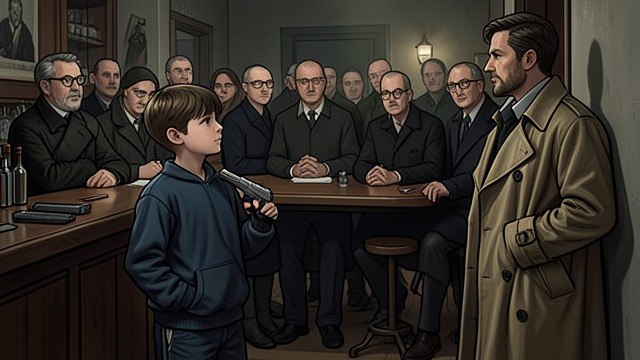
A choice in the bar
When Eddie Friel threatens Stevie, Callan shoots him. The act begins as an effort to protect a friend, but it also places Callan inside the very tradition of retaliatory violence that has shaped his imagination. The neighborhood's approval turns the shooting into a usable legend rather than a moment that can be left behind.
The story shows how a community's heroic language can prepare young people to accept killing as identity. Callan's action is both a rescue and a threshold. Afterward, each act of violence can be narrated as necessary, until the narration itself becomes difficult to separate from the habit.
The Attempt to Leave
Refusal and Recapture
A different life imagined
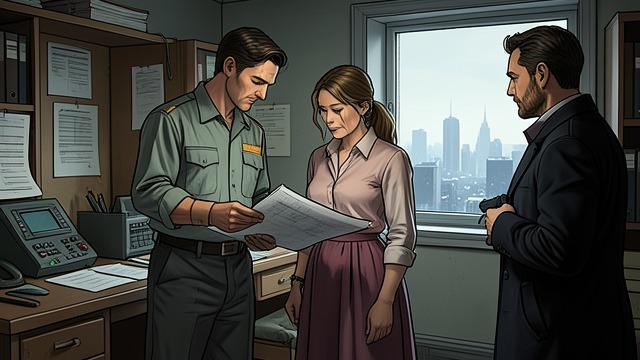
Callan falls in love with Siobhan and begins to work as a carpenter, discovering satisfaction in labor that does not require him to hurt anyone. She asks him to leave the criminal world, and he starts moving toward an ordinary future in which work, home, and affection might replace threats.
The past calls him back
After the death of a crime-family leader, Sal Scachi invokes Callan's obligations and threatens the safety of the woman he loves. Callan agrees to another killing because refusal may endanger Siobhan. His decision is made under coercion, but it still restores the pattern he had tried to escape.
The episode distinguishes freedom from the mere possibility of saying no. Callan understands the moral choice but faces a world where other people can be punished for his refusal. Violence is sustained through intimate leverage, turning personal loyalty into a mechanism for recruitment.
A Crime That Cannot Be Undone
The Point of No Return
The children at the bridge
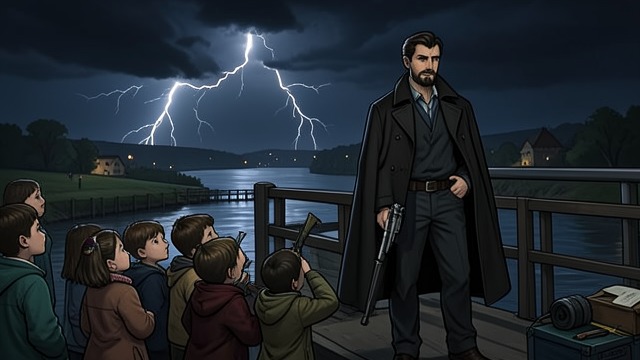
Adán Barrera's strategy to defeat Blondie depends on a plan that brings Pilar's children to a confrontation with the Orejuela brothers. When Fabián arrives carrying the children, Adán understands that Tío's design has put him in a position where protecting his organization requires an atrocity.
A choice made in terror
Adán gives the signal and the children are thrown from the bridge. He later explains the decision through survival, family protection, and the rules of a world without God. Those explanations do not make the act less deliberate; they reveal how fear and strategic calculation can turn a person into the agent of an irreversible crime.
The scene is the novel's starkest demonstration of moral momentum. A person may resist starting an evil and still fail to stop it once it seems entangled with survival. Adán's later devotion to his own daughter does not erase what he did to another family; love and violence remain joined in the same life.
Peace Used as a Trap
Mediation Under Fire
A promise of restraint
Parada persuades Adán and Blondie to consider a peace meeting, trying to interrupt the cycle of revenge. Adán promises not to harm his rival, while both factions secretly seek an advantage. Their public acceptance of mediation exists beside preparations for violence.
The failed restraint
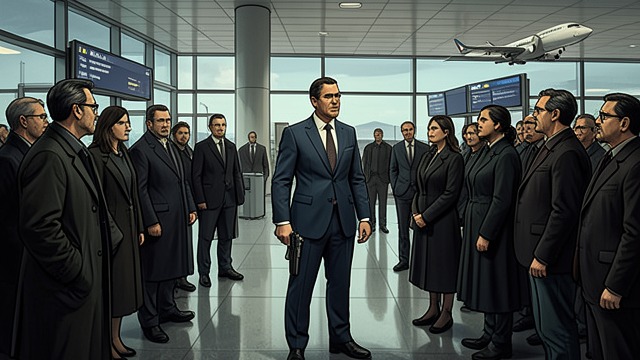
At the airport, the competing plans erupt into a firefight. Callan realizes too late that the person in front of him is Parada, not Blondie; Fabián shoots the priest, and the peace effort becomes another source of grievance. The killing is then recast as mistaken identity, a story that helps powerful actors avoid accountability.
The episode shows how a moral intervention can be absorbed into the machinery it opposes. The factions treat a promise as tactical cover, and the government's explanation makes truth subordinate to political convenience. Parada's attempt to stop violence becomes material for the next round of violence.
The Last Witnesses
Silence as Self-Protection
A story imposed
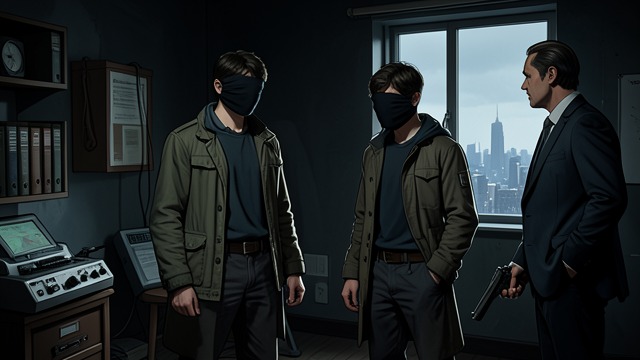
After Parada's death, young gang members Flaco and Dreamer are pressured into giving a false account that calls the killing an accident. Their families are threatened, and their testimony is used to satisfy officials who need a public conclusion. The boys are then killed, leaving the convenient account in place and the coercion hidden.
A different kind of refusal
At the final bridge exchange, Nora exposes her role as the informant and refuses to resume her false relationship with Adán. Callan's decision to protect her rather than obey Sal Scachi's order breaks the command structure that has directed his violence. Art likewise risks confronting the people who once managed his covert world.
The two moments frame truth as a dangerous act, not a simple moral victory. Some witnesses are silenced by force; others choose to speak despite danger. The novel suggests that justice begins when people stop treating silence as an acceptable price for safety, even though speaking cannot restore the dead.
1977, during Callan's adolescence in Hell’s Kitchen
1985, during Callan's relationship with Siobhan
1992, at the Santa Ysabel Bridge
1997, at the Guadalajara airport
1997 to 1998, from the coerced testimony to the bridge confrontation
